Best Indoor Pickleball Balls (2026)
The Franklin Sports X-26 Pickleballs (about $21.99) are one of the most commonly used indoor balls in gyms and rec leagues, favored for a soft, controllable bounce on wood and gym-composite floors.

Beginner, intermediate and expert picks
Beginner
 HEAD Championship 26 Indoor$8.99
At about $8.99, the HEAD Championship 26 Indoor is a low-cost way to get a real 26-hole indoor ball rather than repurposing an outdoor ball. It is a solid pick for someone trying indoor play for the first time, though heavier players hitting hard drives may go through them a bit faster than the tiers above it.
Check priceIntermediate
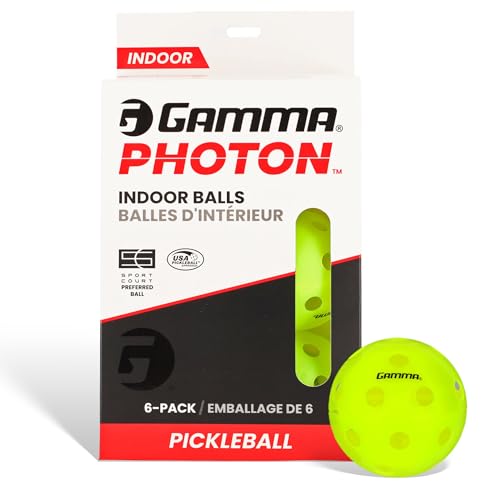 Gamma Photon Indoor Pickleballs Pack of 6$15.99
The Gamma Photon pack of 6 (about $15.99) is a step up in consistency and is a name frequently mentioned by regular indoor players. It sits comfortably between the cheapest single-ball options and the larger premium multi-packs below.
Check priceExpert
 Navona 40 Pack Premium Indoor Pickleball Balls$29.99
The Navona 40-Pack Premium Indoor balls (about $29.99) bring the cost per ball down significantly for anyone running regular indoor sessions or hosting a group, since you are buying in bulk rather than a handful at a time.
Skip it if:A casual or solo player who plays once in a while does not need 40 balls at once; a smaller pack in the tiers above will make more sense.
Check priceIndoor pickleball balls are not just a lighter version of an outdoor ball; they are built with a different hole pattern and softer plastic specifically for gym floors. Before you buy, check your space against the court size calculator, and see the indoor vs outdoor pickleball balls guide if you are not sure which type you actually need.
What is different about an indoor pickleball ball?
Indoor balls typically have 26 larger holes, compared to the 40 smaller holes on an outdoor ball, and the plastic is softer overall. That softness is intentional. Indoor courts, whether a converted gym floor, a wood basketball court, or a rubberized multi-use surface, do not need a ball that resists pavement abrasion. Instead they need a ball that behaves predictably indoors, where there is no wind to fight and rallies tend to involve more finesse shots close to the net. Balls like the Franklin X-26 and the Gamma Photon are built around that softer, larger-hole design.
Which indoor pickleball ball is best for beginners?
New players are often better served by a slightly softer, more forgiving ball while they are still learning to control pace and spin. The HEAD Championship 26 is an accessible starting point at a low price point, and the Onix Recruit Ready-to-Play balls are another budget-friendly option worth comparing before you commit to a larger multi-pack. Since paddle swing effort also plays into how a beginner controls the ball, it is worth reading our paddle weight guide alongside your ball choice; heavier or head-heavy paddles increase load on the elbow and shoulder, and anyone with existing tennis elbow or joint pain should check with a doctor or physical therapist before swinging a heavier setup hard and often.
Franklin X-26 vs Gamma Photon: how do the top indoor balls compare?
| Ball | About | Best for |
|---|---|---|
| Franklin X-26 | $21.99 | Rec leagues and gym play where consistency matters most |
| Gamma Photon (6-pack) | $15.99 | Regular indoor players who want a trusted mid-price option |
| HEAD Championship 26 | $8.99 | First-time indoor players or a low-cost backup pack |
| Mint Cannonballz 26-Hole | $12.95 | Buyers who want an alternative brand at a mid-low price |
| Navona 40-Pack Premium Indoor | $29.99 | Groups or coaches who need a large supply on hand |
How many indoor balls do you actually need?
Indoor balls tend to survive longer than outdoor balls because gym floors are far gentler than asphalt, but they still go out of round eventually, especially with hard, flat drives. Run your expected weekly sessions through the ball count calculator to figure out whether a small 6-pack like the Warping Point Indoor balls will cover you or whether a bulk option like the Pickleball Marketplace Onix Indoor balls or the Navona 40-pack makes more sense. A good rule of thumb for a single regular playing group is to keep at least six in rotation so a cracked ball never ends a session early.
Do indoor balls crack the way outdoor balls do?
Yes, though less often. Hard, flat drives that repeatedly hit the same spot, or balls that end up rolling under gym bleachers and getting stepped on, are common causes of premature wear reported by owners. If a ball starts to feel mushy in one spot or bounces unevenly, it is time to swap it out rather than keep playing with an inconsistent ball, since that inconsistency will make it harder to judge your shots accurately.
Can you use an indoor ball outside, or vice versa?
You can in a pinch, but neither performs as intended out of its element. An indoor ball outdoors will scuff and go out of round quickly against pavement and gets pushed around in any wind. An outdoor ball indoors tends to feel too hard and too lively, skidding and bouncing higher than players expect on a smooth gym floor. If you regularly play both settings, it is worth keeping a separate stock of each rather than trying to make one ball do both jobs.
What does the price difference between indoor balls actually buy you?
Indoor balls in this guide range from about $8.99 to about $29.99, and most of that spread comes down to manufacturing consistency and pack size rather than any dramatic difference in design. A budget option like the HEAD Championship 26 uses the same basic 26-hole indoor shape as the pricier Franklin X-26, but owners of the more established, higher-priced balls tend to report steadier bounce from ball to ball within a pack. That consistency matters more as your level of play increases, since a slightly unpredictable bounce is a minor annoyance in a casual social game but a real problem when you are trying to control a fast exchange at the net. For most players just starting indoor play, a budget or mid-price ball is a perfectly reasonable place to begin, with an upgrade to a more consistent ball worth considering only once you can actually feel the difference in your own play.
What should coaches and clubs look for in an indoor pickleball ball?
Coaches and club organizers buying for group sessions have different priorities than an individual buying a six-pack. Bulk consistency across a large pack matters more than it does for casual play, since a mismatched ball in a drill can throw off a whole group's timing without anyone realizing why. A large bulk option like the Navona 40-Pack Premium Indoor balls is built with this kind of use in mind, keeping cost per ball low while supplying enough volume for a full class or clinic. It is also worth keeping a couple of smaller packs, such as the Mint Cannonballz 26-Hole balls or Gamma Photon Indoor balls, on hand as a backup so a single bad batch or a run of cracked balls does not derail an entire session.
How does an indoor ball's hole pattern affect spin and control?
The larger, fewer holes on an indoor ball change how air moves through it during flight compared to an outdoor ball's smaller, denser hole pattern. In practice, this generally means an indoor ball holds a slightly truer flight path over short distances, which suits the tighter, more finesse-oriented rallies typical of indoor courts. It also means spin applied at the paddle face can grip the ball slightly differently than it would on an outdoor ball, which is one reason players who switch between indoor and outdoor regularly report needing a few minutes to adjust their touch shots each time they change surfaces.
Where should you store indoor pickleball balls between sessions?
Indoor balls hold up well to normal room-temperature storage, but leaving them in a hot car trunk or a cold garage over long stretches can accelerate the same stiffening and softening effects that temperature has on outdoor balls, just with less abrasion involved day to day. Keeping a pack such as the Pickleball Marketplace Popular Fuse Indoor balls in a gear bag at a stable indoor temperature, rather than in a vehicle between weekly sessions, is a simple way to keep them performing consistently for longer. This matters more for players who buy in bulk and expect a large pack to last several months of regular play rather than being used up in a single session.
How we chose
These recommendations come from published product listings, hole-count and material specifications where the manufacturer states them, and patterns reported across verified owner reviews. We did not play-test these balls in person, and durability claims reflect what owners commonly report rather than in-house testing. Prices are shown as "about" since Amazon pricing changes over time.
Buying tips
- Buy a small pack first if you are new to indoor play, then move to a bulk option like the Navona 40-pack once you know your court's wear rate.
- Do not assume price alone tells you quality; several budget indoor balls here are frequently recommended by regular players.
- Keep indoor and outdoor balls in separate labeled bags if you play both surfaces, so you always grab the right one without checking.
- Pair your ball choice with the right court size using the court size calculator if you are setting up a home or gym court from scratch.
Also worth considering
 Onix Recruit Ready-to-Play Indoor Pickleball Balls
  Mint Cannonballz 26-Hole Indoor Pickleballs
 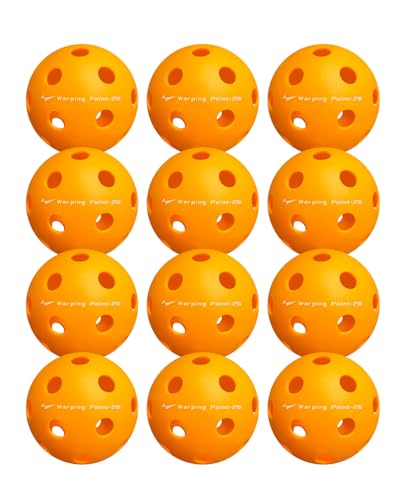 Warping Point Indoor Pickleball Balls
  Pickleball Marketplace Onix Indoor Pickleball Balls
  Gamma Photon Indoor Pickleballs
 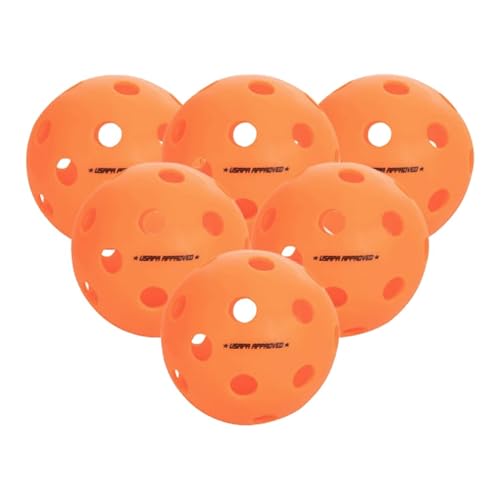 Pickleball Marketplace Popular Fuse Indoor Orange Pickleball
 Email me these picks
Every item on this page with its current price, in one email, so you can shop it later or in pieces. No sales sequence.
Used only to send the list. You can also just read it here.Frequently asked questions
How many holes do indoor pickleballs have?
Indoor pickleballs typically have 26 larger holes, compared to 40 smaller holes on an outdoor ball. The larger holes and softer plastic give indoor balls a gentler bounce suited to gym floors, where wind and pavement abrasion are not a factor.
Are indoor pickleballs softer than outdoor ones?
Yes. Indoor balls use a softer plastic formulation than outdoor balls, which are made harder to survive impacts with asphalt and concrete. The softer indoor ball behaves more predictably on wood and gym-composite floors.
What is the best indoor pickleball ball for a rec league?
The Franklin X-26 is one of the most commonly used indoor balls in rec leagues and gyms, valued for a consistent, controllable bounce. The Gamma Photon is a frequently recommended alternative at a slightly lower price point.
Can I use an outdoor ball indoors?
You can, but it usually feels too hard and too lively, skidding and bouncing higher than expected on a smooth gym floor. For consistent, controllable play indoors, a purpose-built 26-hole indoor ball performs better.
How much do indoor pickleballs cost?
Indoor pickleballs in this guide range from about $8.99 for a budget option to about $29.99 for a large 40-pack aimed at groups or coaches. Buying in bulk generally lowers the per-ball cost for anyone playing several times a week.
How often should I replace indoor pickleballs?
Replace a ball as soon as it feels mushy in one spot, bounces unevenly, or goes visibly out of round. Indoor balls tend to last longer than outdoor balls thanks to gentler playing surfaces, but hard, repeated drives can still wear a ball out over time.
Researched from published specs and verified owner reviews, not play-tested by us, and not professional advice. Heavier paddles add load on the elbow and shoulder; ask a doctor or physical therapist about joint pain.