Paddle core thickness calculator
A 16 mm core gives more control, a softer feel and a larger sweet spot, and suits most beginners and kitchen-line players. A 13 or 14 mm core gives more pop and power for players who drive from the baseline. The whole paddle is about 1 to 2 mm thicker than its core once the faces are added.
Gear that matches your result
 SVICX Pickleball Paddles,Carbon Fiber Pickleball Paddle,16mm Full spec sheet
  JOOLA GRAF Edge 16mm Pickleball Paddle Full spec sheet
  Vomeepeak Edgeless Thermoformed Pickleball Paddle Carbon Fiber Full spec sheet
  JOOLA 3S Pickleball Paddles Full spec sheet
  Vatic Pro V-Sol Pro V7 16mm Full spec sheet
  JOOLA Ben Johns Perseus Pro IV 14mm Pickleball Paddle Full spec sheet
  Diadem Edge BluCore Pro Pickleball Paddle Full spec sheet
 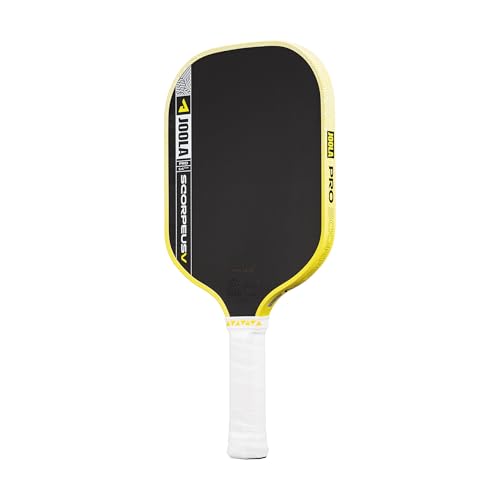 JOOLA Pro V Pickleball Paddle 14mm standard Full spec sheet
 How this calculator works
score = style (control +2, power -2) + where you win (kitchen +1, baseline -1) + level (beginner +1) + arm (sore +1); score >= 2 -> 16 mm, 0 to 1 -> 14 mm, below 0 -> 13 mm
Construction matters as much as thickness: a thermoformed 14 mm foam paddle can feel softer than a hard 16 mm honeycomb one. Treat the answer as a starting point.
A well-reviewed paddle at $69.98, picked from the middle of the price range rather than the cheapest listing.
13 mm core · carbon fiber face
Email me my result and the picks
Your calculator settings and the matching gear list with current prices, in one email.
Used only to send the list. You can also just read it here.Frequently asked questions
How thick is a pickleball paddle?
Most pickleball paddle cores are 13 to 16 mm thick, and the face skins add roughly 1 to 2 mm more, so the whole paddle is usually about 14 to 18 mm, a little over half an inch. There is no thickness limit in the USA Pickleball rules; the rules restrict length, width and surface texture instead.
Is a 14mm or 16mm pickleball paddle better for beginners?
A 16 mm paddle suits most beginners better. The thicker core keeps the ball on the face slightly longer, which makes dinks, drops and resets more controllable, and it tends to feel softer and more forgiving on off-center hits. A 14 mm paddle adds pop and is a reasonable pick for a beginner coming from tennis who already drives the ball well.
Does a thinner paddle give more power?
Generally yes. A thinner core, such as 13 mm, is stiffer and returns the ball faster, which adds pop on drives and speed-ups. The tradeoff is less control and a smaller effective sweet spot. Thermoformed and foam core paddles blur this rule, so read the construction as well as the number.
What does 13mm vs 16mm mean on a pickleball paddle?
The number is the thickness of the core in millimetres, the honeycomb or foam layer between the two faces. A 13 mm core plays faster and more powerful, a 16 mm core plays softer with more control. Many popular models are sold in both thicknesses, so you can choose the same shape and face in either feel.
Can a thicker paddle help tennis elbow?
Many players with elbow pain find a 16 mm core more comfortable because it absorbs more impact vibration. Grip size and paddle weight matter at least as much. This is general gear guidance, not medical advice, so talk to a doctor or physical therapist about persistent pain.
Researched general guidance, not professional or medical advice. Heavier and head-heavy paddles increase load on the elbow and shoulder; if you have tennis elbow or joint pain, ask a doctor or physical therapist.