Pickleball Ball Chart: Indoor vs Outdoor Specs
Outdoor pickleballs usually have 40 smaller holes and are harder and heavier (about 0.9 oz), so they handle wind; indoor balls usually have 26 larger holes and are softer and lighter (about 0.8 oz), so they play slower on gym floors.

All approved balls must meet USA Pickleball size, weight and bounce specifications; the differences below are typical, not absolute.
Indoor vs outdoor
| Property | Outdoor | Indoor |
|---|---|---|
| Holes | Usually 40, smaller | Usually 26, larger |
| Weight | About 0.85 to 0.94 oz | About 0.8 oz |
| Hardness | Harder plastic | Softer plastic |
| Speed | Faster, lower bounce in wind | Slower, more controllable |
| Durability | Can crack, especially in cold | Softens and loses bounce |
| Surfaces | Concrete, asphalt, acrylic | Gym floors, wood, sport tile |
Ball rules (summary)
| Spec | Requirement |
|---|---|
| Diameter | 2.87 to 2.97 in |
| Weight | 0.78 to 0.935 oz |
| Holes | 26 to 40 circular holes |
| Color | A single uniform color |
Gear for this chart
 Franklin Sports Pickleball-x Performance 40 Outdoor Balls-Optic
  Amazon Basics Outdoor Pickleball Balls
  JOOLA HC-40 Hardcourt Pickleball Balls with Storage Tube
  HEAD Championship 26 Indoor
 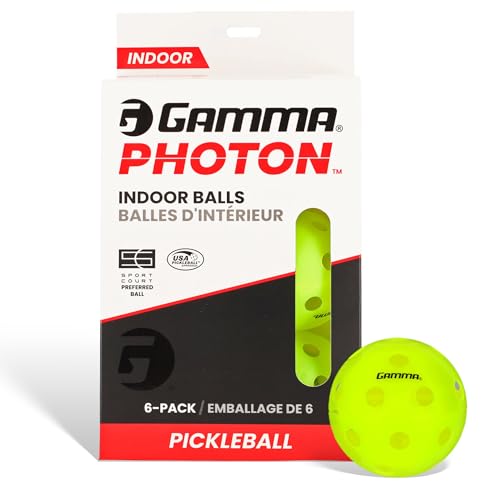 Gamma Photon Indoor Pickleballs Pack of 6 Navona 40 Pack Premium Indoor Pickleball Balls
 Email me this chart
Every item on this page with its current price, in one email, so you can shop it later or in pieces. No sales sequence.
Used only to send the list. You can also just read it here.Frequently asked questions
What is the difference between indoor and outdoor pickleballs?
Outdoor balls usually have 40 small holes, harder shells and more weight, which helps them fly true in wind and survive rough surfaces. Indoor balls usually have 26 larger holes and softer shells, which gives slower, more controllable play on smooth floors. Using the wrong one makes the game noticeably faster or slower.
Which pickleball is used in tournaments?
Tournaments use balls from the USA Pickleball approved list, chosen by the event. Outdoor events commonly use hard 40-hole balls (see our outdoor ball roundup for the models), while indoor events use softer 26-hole balls. Check the event rules before practicing with a particular ball.
This is researched general guidance, not professional advice. Specs and prices come from manufacturer listings and change often; confirm details on the product page before buying.