Elongated vs Standard vs Widebody Paddles
Standard shape paddles have the most forgiving sweet spot, elongated paddles add reach and leverage for spin at the cost of some sweet spot width, and widebody paddles split the difference.

7.8 oz listed · 16 mm core · standard shape · carbon fiber face
What is the difference between elongated, standard, and widebody paddles?
USA Pickleball caps the combined length plus width of any paddle at 24 inches total, with length alone capped at 17 inches, and every legal paddle shape works within that same combined limit. Standard shape paddles, like the JOOLA SCORPEUS Heat Vision 16mm Pickleball Paddle, keep length and width closer to balanced, which produces the largest usable hitting area relative to the paddle's overall footprint. Elongated paddles, like the JOOLA GRAF Edge 16mm Pickleball Paddle, shift more of that 24 inch allowance toward length and less toward width, stretching the face out for extra reach. Widebody paddles, like the Onix Evoke Premier CT-16 Premier Pickleball Paddle, do the opposite, favoring width over length for a shorter, broader face. Run your own numbers through our paddle weight calculator once you have narrowed down a shape, since shape and weight distribution interact.
Which shape has the biggest sweet spot?
Standard and widebody shapes generally have the largest sweet spot relative to their length, because more of the paddle's total surface area is concentrated in width rather than stretched out lengthwise. A widebody paddle like the Six Zero Coral Pickleball Paddle 16mm widebody keeps the face short and wide, which spreads the forgiving hitting zone across more of the paddle. Elongated paddles trade some of that width, and therefore some sweet spot size, for the extra length and leverage described below, which is why they are more often recommended to players who have already developed consistent contact.
Which shape gives the most reach?
Elongated paddles give the most reach by design, since their extra length extends the hitting face farther from your hand without changing the 24 inch combined limit. The JOOLA GRAF Edge 16mm Pickleball Paddle and paddles like it are popular with players who want extra length at the net for reaching wide dinks or extending through contact on spin-heavy shots. That same extra length also increases swing weight slightly for a given static weight, since more mass sits farther from the handle, which is worth factoring in alongside our swing weight vs twist weight guide.
Do elongated paddles have shorter handles?
Often, yes. Because elongated paddles put more of the 24 inch combined allowance into the hitting face, the handle is frequently shorter than on an equivalent standard or widebody paddle to keep the overall paddle within the same length limit. This mainly matters for players who use a two-handed backhand, since a shorter handle leaves less room for a second hand. If a two-handed grip is important to your game, check the handle length specifically rather than assuming every elongated paddle handles the same way.
What is a hybrid shape paddle?
Hybrid is a shape category some manufacturers use to describe a paddle that blends elements of two shape families, for example a face closer to standard width but with a slightly extended length, or an elongated face paired with a wider throat. The Gearbox GBX Power Hybrid Pickleball Paddle is an example of this in-between approach. Because hybrid is not a standardized term, treat it the way you would a generation label, useful as a clue but not a substitute for checking the actual listed dimensions.
Which shape should beginners choose?
Standard shape is generally the easier starting point for new players because it maximizes sweet spot size relative to the paddle's footprint, which is more forgiving on the inconsistent contact every beginner makes while learning. A widebody paddle like the Engage Pursuit Pro EX Pickleball Paddle is a reasonable alternative for the same reason. Save elongated shapes for once you are consistently making clean contact and are specifically chasing extra reach or spin leverage, since that is where the tradeoff in sweet spot size actually pays off rather than working against you on every missed dink and rushed return. Our broader guide to choosing a paddle covers how shape fits alongside weight, thickness, and material.
Shape comparison at a glance
| Shape | Sweet spot | Reach | Handle length | Best for |
|---|---|---|---|---|
| Standard | Largest | Shortest | Longest | Beginners, all-court play, two-handed backhands |
| Widebody | Large | Short to moderate | Moderate | Forgiveness with a bit more reach than standard |
| Elongated | Smaller | Longest | Shortest | Experienced players, spin, extra net reach |
| Hybrid | Varies | Varies | Varies | Players wanting a specific blend, check exact specs |
How does shape affect two-handed backhands specifically?
A two-handed backhand needs enough room on the handle for a second hand to grip comfortably below the primary hand, which is directly limited by how much handle length a given paddle has left after its face length is subtracted from the 24 inch combined total. Standard shape paddles, with generally longer handles, tend to accommodate a two-handed backhand more comfortably than elongated paddles, where the extra face length often comes specifically at the handle's expense. If a two-handed backhand is a core part of your game, check listed handle length directly rather than assuming any paddle within a shape category handles the same way, since handle length still varies model to model within each shape family.
Does paddle shape affect serve and overhead power?
Shape has a smaller direct effect on serve and overhead power than weight or core thickness, but it contributes indirectly through swing weight. An elongated paddle's extra length pushes more mass farther from the handle for a given static weight, which raises swing weight and can add a bit more pop on full swings like serves and overheads, similar to how a longer lever adds force at its tip. A standard or widebody paddle of the same static weight generally has a slightly lower swing weight as a result of its shorter length, trading some of that swing power back for quicker handling on fast net exchanges.
Common shape-related mistakes
The most common mistake is choosing an elongated paddle purely because it looks more advanced or is used by a favorite touring player, without accounting for the smaller sweet spot and shorter handle that generally come with that extra length. A second mistake is assuming widebody and standard shapes are interchangeable since both prioritize a large sweet spot, when the difference in exact length and width still changes reach and handle room in ways worth checking on the specific listing rather than assuming from the shape label alone. A third mistake is ignoring shape entirely and shopping purely by weight or price, when shape is just as responsible for how a paddle feels in extended rallies and at full reach on wide shots.
Can I switch shapes without relearning my whole game?
Most players can adapt to a shape change within a few sessions, since the core mechanics of serving, dinking, and driving stay the same across shapes. The biggest adjustment is usually timing on contact near the edges of the face, since a smaller sweet spot on an elongated paddle punishes slightly off-center hits more noticeably than a standard or widebody paddle would. If you are moving from standard to elongated for the first time, expect a short adjustment period focused specifically on contact consistency near the edges rather than a need to relearn stroke mechanics from scratch. Playing a few practice sessions or a casual match before switching shapes for a league match or tournament is a reasonable way to confirm the new shape is actually working for you before it matters in a competitive setting.
Buying tips
Shape is one of the harder specs to judge from a photo, since two paddles can look similar but differ by half an inch in length or width, which meaningfully changes sweet spot and reach. Check the listed dimensions on our paddle shape chart rather than relying on a shape label alone, especially for hybrid paddles. A premium paddle in a standard shape, like the JOOLA Pro V Pickleball Paddle 14mm standard, shows that shape is a separate decision from price tier or skill level. These comparisons reflect USA Pickleball's published rules and manufacturer-listed dimensions rather than in-person testing.
Frequently asked questions
Gear mentioned in this guide
 JOOLA GRAF Edge 16mm Pickleball Paddle Full spec sheet
  Onix Evoke Premier CT-16 Premier Pickleball Paddle Full spec sheet
  Six Zero Coral Pickleball Paddle 16mm widebody Full spec sheet
  Engage Pursuit Pro EX Pickleball Paddle Full spec sheet
  Gearbox GBX Power Hybrid Pickleball Paddle Full spec sheet
 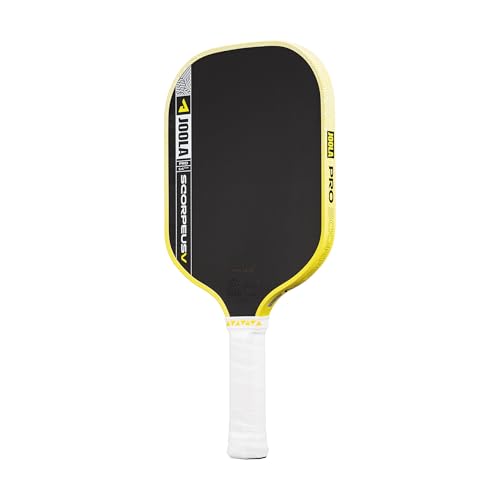 JOOLA Pro V Pickleball Paddle 14mm standard Full spec sheet
 Email me this guide's gear list
Every item on this page with its current price, in one email, so you can shop it later or in pieces. No sales sequence.
Used only to send the list. You can also just read it here.Frequently asked questions
What is the difference between elongated and standard pickleball paddles?
Standard paddles keep length and width closer to balanced, producing a larger sweet spot relative to the paddle's footprint. Elongated paddles stretch the face lengthwise within the same 24 inch combined length and width limit, adding reach and leverage for spin at the cost of some sweet spot width and often a shorter handle.
What is a widebody pickleball paddle?
A widebody paddle favors width over length within the same 24 inch combined limit that applies to every legal paddle shape, producing a shorter, broader hitting face. This generally gives a large, forgiving sweet spot similar to a standard shape while sacrificing some reach compared with an elongated paddle.
Do elongated paddles have a smaller sweet spot?
Generally yes, relative to standard or widebody paddles. Because elongated paddles put more of their total surface area into length rather than width, the forgiving hitting zone is typically narrower. Many players accept this tradeoff for the extra reach and spin leverage the added length provides.
Why do elongated paddles have shorter handles?
USA Pickleball caps the combined length plus width of a paddle at 24 inches total. Elongated paddles use more of that allowance on the hitting face, which often leaves less room for the handle if the paddle is to stay within the same overall length limit as a standard shape paddle.
What shape pickleball paddle should a beginner buy?
Standard or widebody shapes are generally easier for beginners because they maximize the forgiving sweet spot relative to the paddle's size, which helps with the inconsistent contact every new player makes while learning. Elongated shapes are usually a better fit once contact and technique are more consistent.
What does hybrid shape mean on a pickleball paddle?
Hybrid is a brand-specific term for a paddle that blends features of two shape families, such as a standard width with slightly extended length. It is not a standardized category across manufacturers, so check the paddle's actual listed length and width rather than assuming what hybrid means for a specific product.
This is researched general guidance, not professional advice. Specs and prices come from manufacturer listings and change often; confirm details on the product page before buying.