How Long Do Pickleball Paddles Last?
A pickleball paddle used regularly typically lasts anywhere from several months to a few years before dead spots appear in the core, with frequent outdoor players usually seeing wear sooner than casual indoor players.

7.85 oz listed · 16 mm core · carbon fiber face
A pickleball paddle does not fail all at once. It loses performance gradually, usually starting with the core, until one day a shot that should have been a clean put-away comes off the face feeling dead. Knowing what causes that decline, and what can and cannot be fixed with maintenance, helps decide when to keep playing on a paddle versus when to replace it.
How long does a pickleball paddle usually last?
Based on published product guidance and widely reported owner reviews, most recreational players get somewhere between one and a few years out of a paddle before performance noticeably drops. Players who hit outdoors frequently, especially on rough asphalt or concrete and especially those who mishit hard against the pavement or a fence, tend to see the first signs of wear sooner, sometimes within several months of heavy use. Indoor, lighter-frequency players commonly get more time out of the same paddle before anything changes. There is no fixed expiration date; it comes down to how hard and how often the paddle is used, and how well it has been protected along the way.
What is a "dead spot" on a pickleball paddle?
A dead spot is an area of the paddle face that has lost its lively response, producing a duller sound and noticeably less power or pop compared to the rest of the face. It happens when the honeycomb or foam cells inside the core get crushed or compressed in that specific spot, usually from a hard mishit or a repeated edge impact against the ground. You can often find a dead spot by tapping lightly around the face with a coin or your knuckle and listening for a change in pitch, or by comparing how a ball feels coming off different parts of the face during warm-up hits.
What causes the core to break down over time?
Most modern paddle cores use a polymer honeycomb structure or a foam material, and both can compress or degrade gradually under repeated impact, the same way any material fatigues with continued stress. Every solid contact with a ball compresses the core microscopically; over thousands of hits, especially hard drives and smashes, some of those cells lose their ability to spring back fully. This shows up first as a slight dulling of overall feel, and eventually as a defined dead spot in the areas that take the most repeated impact, often near the center or the edges depending on a player's typical contact point.
| Sign | What it means | Fix |
|---|---|---|
| Dull sound or reduced pop in one area | A dead spot, usually crushed core cells | None; the paddle needs replacing once confirmed |
| Cracked or peeling edge guard | The core's exposed edge is losing protection | Replace the edge guard tape |
| Grimy or slick-feeling paddle face | Dirt and grit embedded in the texture | Clean with a paddle eraser or carbon cleaner |
| General loss of spin over time | Surface texture worn smooth from use | Cleaning helps some; heavy wear cannot be reversed |
Can you fix a dead spot on a pickleball paddle?
No, not once it is confirmed. A dead spot means the core material itself has physically compressed or broken down in that area, and no amount of cleaning, taping, or surface maintenance restores the original responsiveness. At that point the paddle can still be used, since a dead spot does not make it dangerous or illegal to play with, but the reduced pop and inconsistent feel are permanent. This is the main reason paddle longevity discussions focus on prevention and early detection rather than repair.
What does an edge guard do, and does it need replacing?
The edge guard is the strip of material wrapped around the paddle's perimeter, covering the exposed edge of the core where it is most vulnerable to chips and impact damage, particularly from the paddle hitting the ground or a fence during play. A cracked, peeling, or missing section of edge guard lets moisture and impact damage reach the core directly at that spot, which can speed up dead spot formation right at the edge. Edge guard tape is inexpensive and simple to replace, and doing so proactively when the original guard starts wearing is one of the cheapest ways to extend a paddle's useful life. Options like Selkirk Sport Pickleball Edge Guard Tape or JOOLA Clear Edge Guard Tape are built as direct replacements, while a heavier-duty option such as Carbex Lab Pickleball Edge Guard Tape holds up longer for players who are hard on their gear.
Does cleaning the paddle face actually help?
Yes, for a specific problem: dirt and grit embedded in a textured paddle face gradually fills in the surface texture that generates spin, making the paddle feel and play noticeably smoother, and less grippy, than when it was new. Regularly wiping the face down with a dedicated paddle eraser, such as Professor Pickleball Carbon Cleaner or CRBN Pickleball Paddle Eraser, or a compact option like Srikel Pickleball Paddle Cleaner Eraser with Case,Carbon Fiber, removes that buildup and restores much of the original grip and spin. This is different from fixing a dead spot: cleaning addresses surface-level dirt, not core damage, so it will not help a paddle that has already lost pop in a specific area.
How do I know when it is actually time to replace my paddle, versus just clean or repair it?
If the issue is a dirty, slick-feeling face with reduced spin but even, consistent pop across the whole surface, cleaning is likely enough. If the edge guard looks cracked, lifted, or is missing sections but the face still feels lively everywhere, replacing the edge guard tape is the right fix. If you find a specific spot on the face that sounds duller and produces noticeably less power than the rest of the paddle, even after cleaning, that is a dead spot, and the only real fix is a new paddle.
Does core material affect how long a paddle lasts?
Yes, to some degree. Polymer honeycomb cores, the most common construction, tend to compress gradually and predictably with use, giving a fairly steady decline in feel before a dead spot fully sets in. Foam-core paddles, a newer construction style, are often marketed around eliminating dead spots entirely, since a solid foam fill does not have discrete honeycomb cells that can individually crush the way a honeycomb structure does. Both constructions can still lose performance over time from other causes, like a damaged edge guard letting moisture in, so core type changes the specific failure pattern more than it guarantees a longer overall lifespan.
Does storage or transport affect paddle lifespan?
It can, particularly with heat and moisture. Leaving a paddle in a hot car for extended periods can affect the adhesives bonding the face material to the core, and repeated exposure to this kind of heat cycling is sometimes reported by owners as contributing to earlier face separation or a duller feel over time. Storing paddles in a paddle bag or cover, out of direct sun and extreme heat between sessions, is a simple habit that protects the investment regardless of core type or edge guard condition.
Does paddle price affect how long it lasts?
Not in a straightforward way. Higher-priced paddles often use more advanced core and face materials aimed at improving feel, spin, or power rather than specifically extending lifespan, and expensive paddles can still develop dead spots from hard, frequent outdoor play just like budget models. A mid-range, well-built paddle such as Selkirk Sport SLK Halo Control Max Pickleball Paddles played carefully with a maintained edge guard can outlast a premium paddle that gets slammed on pavement every session.
To slow down wear from the start, keep the edge guard in good shape, clean the face periodically, and avoid unnecessary hard contact with the ground or fences. For related tuning once you understand your paddle's condition, see how to add lead tape to a pickleball paddle, or compare core materials in carbon fiber vs fiberglass vs graphite paddles before your next purchase.
Gear mentioned in this guide
 Professor Pickleball Carbon Cleaner
  CRBN Pickleball Paddle Eraser
  Selkirk Sport Pickleball Edge Guard Tape
  JOOLA Clear Edge Guard Tape
  Carbex Lab Pickleball Edge Guard Tape
 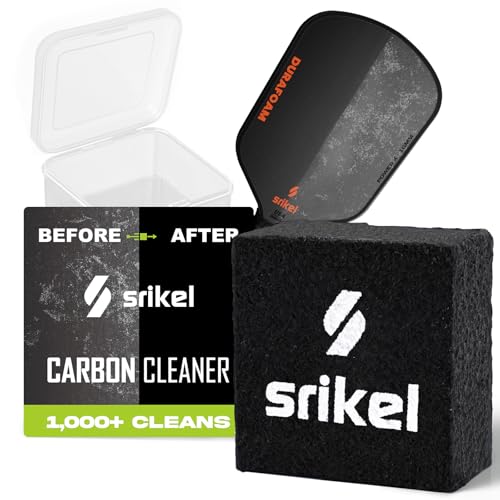 Srikel Pickleball Paddle Cleaner Eraser with Case,Carbon Fiber
 Email me this guide's gear list
Every item on this page with its current price, in one email, so you can shop it later or in pieces. No sales sequence.
Used only to send the list. You can also just read it here.Frequently asked questions
How long does a pickleball paddle usually last?
Most recreational players get somewhere between several months and a few years out of a paddle, based on published guidance and common owner reviews. Frequent outdoor players on rough surfaces tend to see wear sooner than casual indoor players.
What causes dead spots on a pickleball paddle?
Dead spots form when the core's honeycomb or foam cells get crushed or compressed in one area, usually from hard mishits or repeated edge impacts. That area then produces a duller sound and noticeably less power than the rest of the face.
Can you fix a dead spot on a pickleball paddle?
No. Once a dead spot is confirmed, the core material in that area has physically broken down, and no cleaning, taping, or surface treatment restores its original responsiveness. The paddle can still be used, but the lost pop is permanent.
What does an edge guard do on a pickleball paddle?
The edge guard covers the exposed edge of the core, protecting it from chips and impact damage when the paddle hits the ground or a fence. A cracked or missing edge guard lets damage reach the core directly, which can speed up dead spot formation at that edge.
Should I clean my pickleball paddle face?
Yes, regularly. Dirt and grit fill in the surface texture over time, reducing spin and grip. A paddle eraser or carbon cleaner restores much of that texture, though it only addresses surface buildup, not core damage or dead spots.
How do I know when to replace my paddle?
If the whole face feels dull but even, cleaning usually helps. If the edge guard is cracked but the face still feels lively, replace the edge guard tape. If one specific spot sounds and feels noticeably deader than the rest even after cleaning, that is a dead spot, and replacement is the only fix.
This is researched general guidance, not professional advice. Specs and prices come from manufacturer listings and change often; confirm details on the product page before buying.