Best Intermediate Pickleball Paddles (2026)
The JOOLA Perseus Double Vision 16mm Pickleball Paddle (about $102) is our top pick for intermediate players: a 16mm carbon fiber elongated paddle at about 7.8 ounces that adds spin and control over a beginner paddle without jumping to a tour level price.
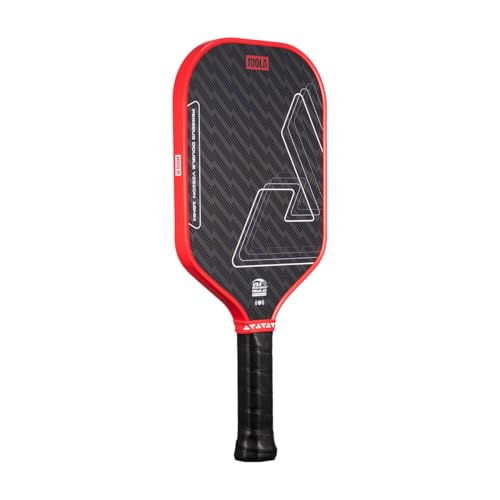
The JOOLA Perseus Double Vision 16mm Pickleball Paddle brings a 16mm carbon fiber face to an elongated shape at about 7.8 ounces, adding real spin and reach over a beginner paddle at a price still well under tour level paddles. Compared to the Beginner tier, the carbon fiber face and elongated shape both reward a more developed, consistent swing.
7.8 oz listed · 16 mm core · elongated shape · carbon fiber face
Beginner, intermediate and expert picks
Beginner
 HEAD Radical Elite Pickleball Paddle$43.40
The HEAD Radical Elite Pickleball Paddle is a 15mm, 8.1 ounce paddle with a polymer honeycomb core for about $43, a reasonable last stop before committing to a mid market paddle. It suits a player still finishing up the fundamentals who is not ready to spend $100 or more yet.
Check priceIntermediate
JOOLA Perseus Double Vision 16mm Pickleball Paddle$102.00The JOOLA Perseus Double Vision 16mm Pickleball Paddle brings a 16mm carbon fiber face to an elongated shape at about 7.8 ounces, adding real spin and reach over a beginner paddle at a price still well under tour level paddles. Compared to the Beginner tier, the carbon fiber face and elongated shape both reward a more developed, consistent swing.
Check priceExpert
 JOOLA Ben Johns Hyperion Pro IV 16mm Pickleball Paddle$149.95
The JOOLA Ben Johns Hyperion Pro IV 16mm Pickleball Paddle is a tour level carbon fiber paddle at about 8.1 ounces built for a player who already has consistent contact and wants a more refined balance and finish. Compared to the Intermediate tier, the gain is in feel, consistency, and a more premium build rather than a dramatically different core recipe.
Skip it if:Someone who only recently moved past their first beginner paddle, since the narrower elongated sweet spot rewards consistency that takes real time on court to build.
Check priceWhat makes a pickleball paddle right for an intermediate player?
An intermediate paddle generally trades some of a beginner paddle's forgiveness for more spin, control, or pace, once you have consistent enough contact to take advantage of that trade. Before shopping, run your preferred weight through the paddle weight calculator, since it narrows the field faster than browsing by price alone. Most intermediate paddles fall in the $60 to $150 range, a wide enough band that it is worth deciding what you actually want more of before you buy.
The honest signal that you are ready to move past a true beginner paddle is not a length of time playing, it is a specific frustration. Getting outspun consistently at the net points toward a carbon fiber face. Popping dinks up too high points toward a thicker core. Wanting more pace on drives points toward a thinner, elongated paddle. Buying an intermediate paddle without one of those specific reasons often just means buying a more expensive version of the same experience you already have.
It also helps to think about how often you actually play. A player logging several sessions a week will notice the difference a carbon fiber face or a purpose built core makes far sooner than someone playing occasionally, simply from repetition. If you are still playing once every week or two, a mid range paddle in the $60 to $100 area is usually plenty, and the $150 and up tier is better saved for once your play frequency and consistency both increase.
What core thickness should an intermediate player choose?
A 16mm core remains the most common intermediate choice, and for good reason. It is thick enough to stay forgiving at the net while still carrying enough pace on a drive, which matches the mixed style of play most intermediate matches actually involve. The JOOLA Perseus Double Vision 16mm Pickleball Paddle and the WILSON Blaze Tour 16mm Pickleball Paddle both use this thickness at a mid market price. If you already know you favor drives and put away shots over dinking, a thinner 14mm hybrid option like the Gearbox CX14H 8.0 oz Pickleball Paddle or the Paddletek Bantam GTO-C 12.7mm Hybrid Pickleball Paddle is worth comparing directly. Our core thickness guide covers all three common thicknesses side by side.
Standard, elongated, or hybrid shape for an intermediate player?
Shape becomes a more personal decision at this stage than it was as a beginner. An elongated shape, like the one on the JOOLA Perseus Double Vision 16mm Pickleball Paddle or the Engage Pursuit Pro1 Innovation Pickleball Paddle, adds reach and leverage for players developing more spin and pace, at the cost of a narrower sweet spot. A hybrid shape, like the one on the Paddletek Bantam GTO-C 12.7mm Hybrid Pickleball Paddle or the Gearbox CX14H 8.0 oz Pickleball Paddle, keeps some of that added reach while staying closer to a standard paddle's forgiveness. If you are not sure which family suits your game yet, our paddle shape guide is worth reading before you commit to one shape at this price point.
Intermediate paddle options compared
| Paddle | Price | Core | Shape | Best for |
|---|---|---|---|---|
| HEAD Radical Elite Pickleball Paddle | about $43 | 15mm honeycomb | Standard | Last stop before mid market pricing |
| JOOLA Perseus Double Vision 16mm Pickleball Paddle | about $102 | 16mm carbon fiber | Elongated | Balanced spin and control step up |
| Selkirk Sport SLK Halo Pro XL Pickleball Paddles | about $100 | Carbon fiber, polymer honeycomb | Not stated | Selkirk build at a similar price |
| JOOLA Ben Johns Hyperion Pro IV 16mm Pickleball Paddle | about $150 | 16mm carbon fiber | Not stated | Tour level finish and consistency |
Does grip size change as you improve?
Your hand does not change size, but how much you rely on a precise grip does. A beginner often grips a paddle loosely and adjusts mid swing, while an intermediate player relying on more spin and touch benefits from a grip that matches their hand closely enough to allow small, repeatable wrist adjustments without slipping. If you have not measured your grip since you started playing, it is worth rechecking with the ruler method, from the middle crease of your palm to the tip of your ring finger, against our grip size calculator before buying a new paddle, since a mismatched grip can undercut even a well chosen paddle upgrade.
Weight and swing effort as you move up
Do not assume you need to add weight to get more performance out of an intermediate paddle. Most of the paddles in this list, including the JOOLA Perseus Double Vision 16mm Pickleball Paddle at about 7.8 ounces and the JOOLA Ben Johns Hyperion Pro IV 16mm Pickleball Paddle at about 8.1 ounces, stay in a midweight range and get their extra performance from face material and core construction rather than added mass. Heavier and head heavy paddles increase the load on the elbow and shoulder with every swing, so if you are managing any joint pain, prioritize a midweight paddle with a better core and face over a heavier one, and talk to a doctor or physical therapist if pain is already a factor.
Balance point is worth a mention here too, since it changes how a stated weight actually feels in your hand. A paddle can be light on paper but feel head heavy if more of its mass sits toward the face rather than the handle, and that balance is not always listed directly in a product specification. Owner reviews that describe a paddle as feeling heavier or lighter than its stated weight are a reasonable signal to weigh alongside the raw ounce figure, especially if you already know you are sensitive to a head heavy swing.
How we chose these paddles
We did not play test these paddles in person. We selected a spread across the $40 to $150 range with a bias toward paddles that state a carbon fiber face and a documented core thickness, since those two specs drive most of the practical differences a player notices when stepping up from a true beginner paddle. Where a listing does not state a weight, thickness, or shape, we left that field blank rather than assume a typical value. Everything here comes from manufacturer specifications, USA Pickleball's approved paddle records where applicable, and verified owner reviews rather than from our own contact with the ball. We also avoided recommending a jump straight to the most expensive paddle in any single brand's lineup, since an intermediate player is usually better served comparing across a few brands at a similar price than assuming one manufacturer's mid tier paddle is automatically the right fit.
Buying tips for your next paddle
Resist the urge to buy the most expensive paddle in this price range on the assumption that more money guarantees a bigger improvement. It is also worth resisting the pull of a pro's exact paddle simply because you recognize the name from a broadcast or a highlight clip. A tour player's paddle is chosen for a swing and a level of consistency built over years of daily practice, and the same paddle in a newer player's hands often just feels less forgiving without adding a matching benefit yet. The jump from a $43 beginner paddle to a $100 intermediate paddle is usually more noticeable than the jump from $100 to $150, since the bigger construction changes, carbon fiber face, thicker core, elongated shape, tend to happen earlier in the price range. Confirm any paddle you are seriously considering appears on USA Pickleball's approved list if league or tournament play is part of your plan, and if you can, try to hit with a friend's paddle in the range you are considering before buying, since feel is personal in a way no spec sheet fully captures.
It is also worth deciding whether you are optimizing for one specific strength or for a balanced all around paddle. If you already know control or power is your priority rather than a general upgrade, our dedicated guides to paddles for control and paddles for power go deeper into each specific trade off than a general intermediate roundup can, and several of the paddles recommended here overlap with picks in those guides for exactly that reason. If spin is your priority instead, the same logic on core thickness and face material applies, just with more weight put on a raw or textured carbon finish over a painted one.
Frequently asked questions
Also worth considering
 Six Zero Double Black Diamond Control Paddle 14mm elongated Full spec sheet
 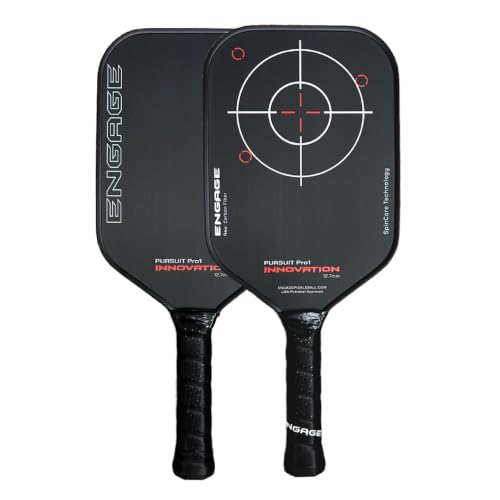 Engage Pursuit Pro1 Innovation Pickleball Paddle Full spec sheet
  Selkirk Sport SLK Halo Pro XL Pickleball Paddles Full spec sheet
  Gearbox CX14H 8.0 oz Pickleball Paddle Full spec sheet
  Paddletek Bantam GTO-C 12.7mm Hybrid Pickleball Paddle Full spec sheet
  WILSON Blaze Tour 16mm Pickleball Paddle Full spec sheet
 Email me these picks
Every item on this page with its current price, in one email, so you can shop it later or in pieces. No sales sequence.
Used only to send the list. You can also just read it here.Frequently asked questions
What is the best pickleball paddle for an intermediate player?
The JOOLA Perseus Double Vision 16mm Pickleball Paddle, about $102, is a well rounded choice with a 16mm carbon fiber face on an elongated shape at about 7.8 ounces. It adds real spin and control over a beginner paddle without jumping straight to a $150 or higher tour level build.
When should I upgrade from a beginner to an intermediate paddle?
Upgrade when you have a specific, repeated frustration rather than just a length of time playing. Getting outspun at the net, popping dinks up too high, or wanting more pace on drives are all specific signals pointing toward a carbon fiber face, a thicker core, or a thinner elongated core, respectively.
How much should an intermediate pickleball paddle cost?
Most intermediate paddles fall between $60 and $150. The biggest practical jump in construction, a carbon fiber face, a documented core thickness, and often an elongated shape, tends to happen in the lower half of that range, so spending at the very top of it does not automatically buy a proportionally bigger improvement.
Should an intermediate player choose an elongated or standard paddle?
It depends on how consistent your contact already is. An elongated shape adds reach and leverage for more spin and pace but narrows the sweet spot, which rewards a more developed swing. A standard or hybrid shape keeps more forgiveness while still allowing a step up in face material and core thickness.
Do intermediate players need a heavier paddle?
No. Most performance gains at this stage come from face material and core thickness rather than added weight. A midweight paddle, 7.8 to 8.2 ounces, is common even among well reviewed intermediate and tour paddles. Heavier and head heavy paddles add more load on the elbow and shoulder per swing, which is a real cost to weigh against any perceived benefit.
Is it worth buying a tour level paddle as an intermediate player?
Sometimes, but the return is usually smaller than the price difference suggests. A tour level paddle mostly refines feel, consistency, and finish rather than adding a fundamentally different core recipe than a well built $100 intermediate paddle. It is a reasonable buy if you already know your preferred specs and are chasing a smaller edge, not a required step.
Researched from published specs and verified owner reviews, not play-tested by us, and not professional advice. Heavier paddles add load on the elbow and shoulder; ask a doctor or physical therapist about joint pain.